
Level Design Research
- Sep 27, 2025
- 5 min read
Updated: Oct 27, 2025
Level Overview
The level I am analysing is Sukhothai in Indiana Jones, the goal in this level is to find the secret artifact in a hidden chamber at a ancient temple.
--------------------------------------------------------------------------------------------------------------------------
Levels of Worldbuilding

The level is set in a jungle in Thailand as an ancient temple, overgrown by the surrounding forest clearly not maintained for centuries, with the temple holding the map to the artifact that Indiana and Voss is looking for, using this low level worldbuilding, they create different puzzles and events to fill the environment to create immersion, for example: the first puzzle the player comes across in the level fits into the environment and story of the world, being based on a game from a previous level making the design of these temples feel similar and connected.

The second puzzle demonstrates to the player how old and worn the temple is with the original path of the cavern destroyed with Indiana needing to parkour across leech infested water to reach the other side, this fits in with the design of the environment being old and abandoned for centuries.

The level also uses small details to enrich the level adding more immersion and history to the area, for example: The first area that shows this is some remains seen praying to a huge statue with carvings found after completing the first puzzle, this shows that the people who built these temples are religious and devoted to their cause which fits into the story that is being conveyed about these figures and this also adds to the age of these structures and when someone last entered them as they were decomposed.

Another small detail is that the entire temple is covered in thick vegetation with vines breaking through walls and moss filling the floors, this fills the atmosphere of the environment and makes it clear that these structures have been untouched for centuries and ecosystems have adapted to its presence and in some areas completely overtaking the structure.

---------------------------------------------------------------------------------------------------------------------------
Pacing and Intensity
They use a variety of methods to slowly build the pace of the level adding small moments of tension and danger to add a level beat with exploration to bring it back down, for example: The level uses traversal and puzzles as deterrents to keep the pace low with adding some dangers to add tension like height or water and add some beat to the level, slowly building up to the last act.

They also use gating to prevent the player from going backwards encouraging them to explore each area before moving on and adding tension that there's no going back.

When it comes to intensity in the level, it slowly builds throughout until the final act where it raises intensity. Having some moments that hold tension keeps the level from losing the players interest but also allows for the player to take their time to explore the environment. The level uses traversal to hold or build pace of the level and acts as a way to gate the player into sections of the map. This can be seen just after the first puzzle as you have to rappel down into water, being unable to get back up and forced to continue on.

They also use cutscenes to reward the player after a high intense moment to bring the intensity down and give the player a breather, this also gives story progress and used to lean into the next segment with either tension or more intensity.


---------------------------------------------------------------------------------------------------------------------------
Guiding The Player
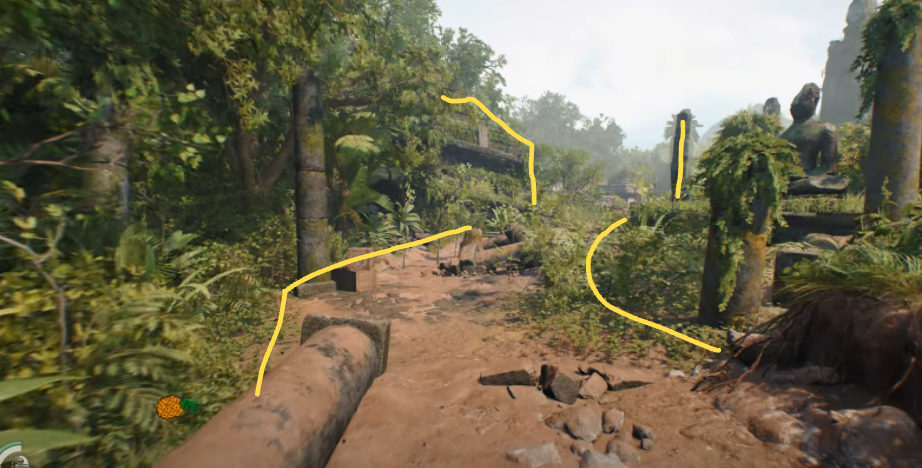
They use several techniques to guide the player through without directly assisting them, using the environment and companion interactions to disguise any guidance given to the player keeping immersion and creating a natural flow to the game. At the start of the level they use a landmark with paths framed from objects in the environment to guide the player toward the goal.

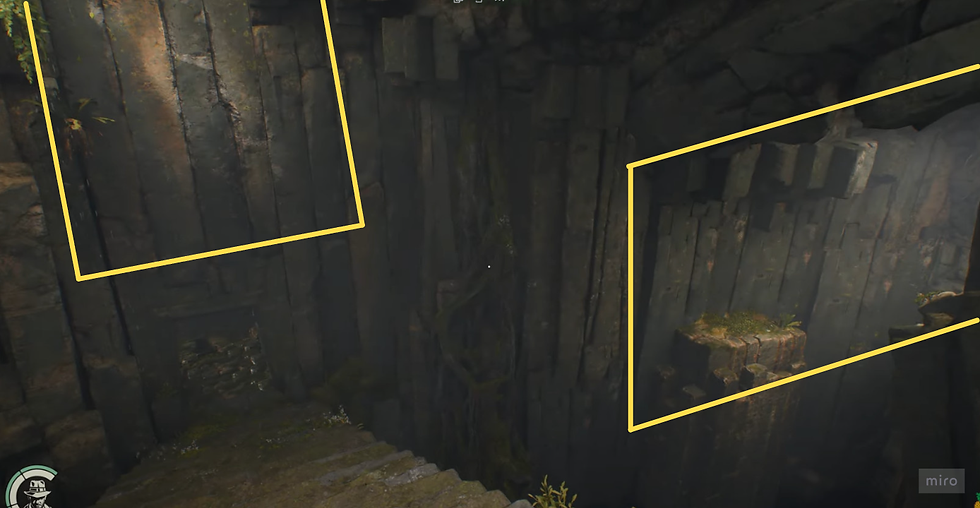
When inside the hidden chamber underground a repeated way the player can know where to go is by lighting. The level consistently uses lighting to direct the way for the player, they make the light sources into the environment so while playing it feels natural and doesn't stick out during gameplay.
During most of the levels in Indiana Jones the player is accompanied by a companion that can drop hints or interact with the environment helping the player if they are stuck in an area for too long while also keeping immersion.

After the first puzzle in the level, you drop down into water that then reveals into a big open space with a totem monument in the centre with lighting cast behind it. Entering this room sets a mood for the rest of the level marking a clear change from the previous area and this one. The totem is used as a recognizable feature and helps the player to orientate themselves.

For each level the game gives the player a map that is slowly drawn out in Indiana's journal. This allows the player to know the environment they have been through and roughly how close they are to the objective.

Towards the end of the level there is a small hole that the player must crawl through, how this is communicated to the player is through an affordance of scratch marks on the ground through the hole into the next chamber also linking the separated areas together.

---------------------------------------------------------------------------------------------------------------------------
Combat
The only combat in the level is towards the end where it has multiple encounters all different from one. another. The first combat event is after escaping the temple where enemies appear naturally from surrounding cover. the player however does not have to engage in combat, instead must cover behind a friendly that is holding a large stone blocking incoming fire, while slowly backing up to a escape route.

After there is a short moment where the intensity drops letting the player breathe and also tricks them into thinking they are safe. The intensity is suddenly brought back up into another combat sequence where the player can now fight back using weapons given throughout the sequence. During this the enemies will appear in different types, boats, infantry or cars and dynamically appear from connected rivers, standing on the river back or even set up on bridges the player must pass under.

This segment ends with the player falling out of the boat and a cutscene with them climbing back onto shore plays, the final combat sequence is where the player must now sneak past enemies to escape, this brings the intensity down to a slower but still intense pace. The player can fight their way through the enemies but it is heavily implied through use of environmental design and being outnumbered in some areas that the ideal decision is stealth with areas being broke up vertically so the player knows where they are safe.

---------------------------------------------------------------------------------------------------------------------------
Narrative
The main ways the level tells the story is through dialogue from the character and companions and cutscenes. Dialogue is used throughout the level while the player is exploring, usually between the player and the companion, this allows the narrative to connect previous levels to the current one, keeping the worldbuilding consistent, this also doesn't stop the players progress of the level as it occurs while they are playing.

Cutscenes are also used to tell important story points, for example, when the player reaches the final chamber in the temple they get a cutscene of Indiana inspecting the artifact, this continues the games story, then from the characters action causes the next sequence the player must face bringing intensity up for the player that leads into that memorable moment.

The level also uses other techniques such as funnelling and reveal where the player is put through a small area that then reveals into a larger one, usually revealing worldbuilding elements or new traversal challenges.


Comments